My Journey as a Healer
1971–72
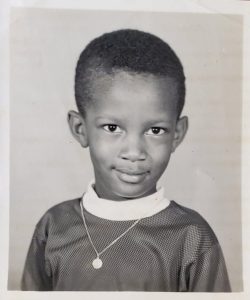
One of the best things that happened to me was my parents splitting up when I was six, which gave me the opportunity to return to Trinidad and spend a year and a half with my bush doctor grandmother.
Trinidad was a paradise and you would have found me naked most of the time and refusing to have my hair combed or brushed, playing with wild animals and up in trees most of the day.
I watched my grandmother carefully as she took care of people from far and wide. I didn’t love the plants at first because I was a very sickly child, so she made me drink lots of horrible tasting teas and even made me put garlic in my socks.
But as I became stronger and healthier, I started to fall in love with herbal medicine. I turned my grandmother’s chicken coop into my doctor’s office and many of the neighbourhood children would come by for health consultations.
My grandmother would also bathe me and many of her patients in herbs, so I basically was in relationship with herbs all day long.
My grandmother was a very interesting woman. She always wore a white or silver turban. She almost always wore white clothes. She was a Shango priest.
She spent half the day in a trance, speaking to spirits, which was wild enough in of itself, but what was even wilder was when I would hear the spirits speaking back to her, which happened often. I could tell lots of stories of amazing and scary things that I witnessed as a kid, but that’s not the point.
My grandmother had a crystal ball and read the present and future through a regular deck of playing cards.
My grandmother took care of everybody and never sent anyone away without helping them. She was quite poor because most of her clients were quite poor and they often could only pay her with a chicken.
She taught me about how important it was to take care of the community. She shortened her life by how much she gave to others.
My grandmother was a lively woman and my last memory of her was dancing with her two decades later to The Police song “Every Little Thing She Does Is Magic.” If I had made up the story, I couldn’t have thought of a more fitting song for her.
My grandmother was more in touch with the spirits and the plants than anyone I’ve ever met in my sixty years of life.
1972–83
The Wilderness Years
I was snatched from the paradise of Trinidad and brought back to Canada, where the white kids greeted me with vicious racism and bullying.
The 70s were a terrible era for health. Those who didn’t live through it might never believe what it was really like. As a young child I was surrounded by adults smoking everywhere — not in my home and not at school, but those were the only places I was safe. There was trash everywhere, on the streets, on the highways, everywhere. My mom worked eleven hours a day to support us, so we were left to make our own food — the food the kids could make for themselves were some of the trashiest foods of the era. TV dinners, Chef Boyardee, Rice-A-Roni, Hamburger Helper.
Luckily, two things saved me from this nutritional and environmental horror. When I was about thirteen or fourteen, my mom started reading Prevention magazine, which was about holistic health, and she very much got into vitamins and supplements and better food. Secondly, I discovered the hippies. I no longer like hippies in general for many reasons, but back then as a kid, they were a godsend.
I started hanging out at small health food stores and I would spend hours just smelling all the different herbs and spices and essential oils. It reminded me so much of my grandmother and it was nirvana for me.
Instead of snacks and comic books and record albums, I spent most of the money from my first jobs on things from health food stores.
1983-1997
Mentors and Influencers
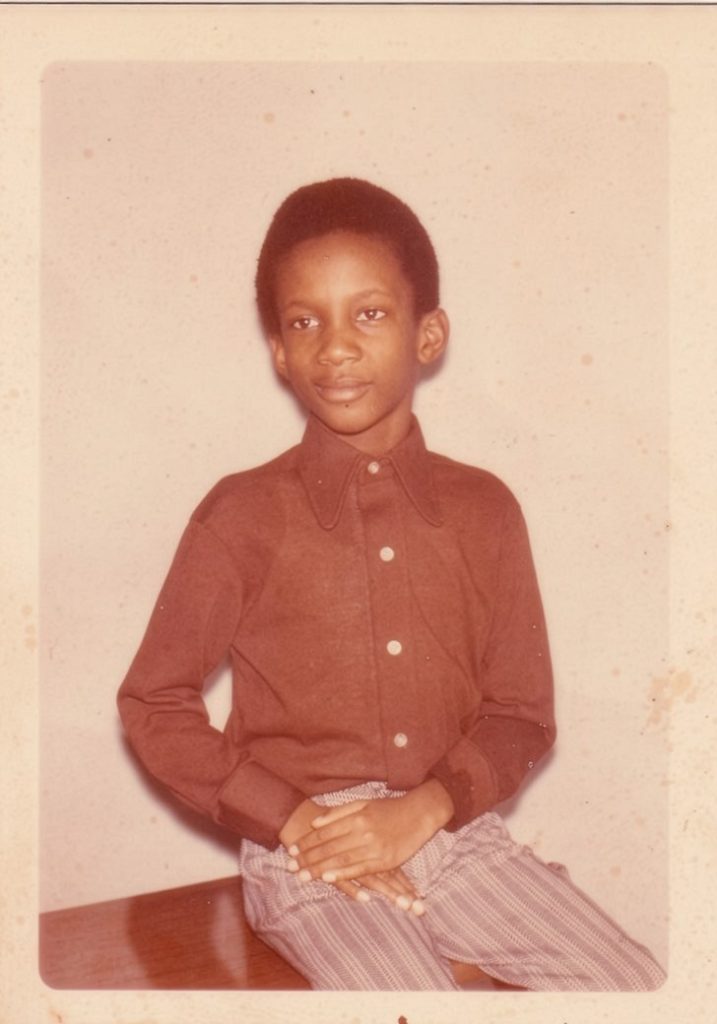
As a teenager, I always wanted to go to medical school. I wanted to help people without being so reliant on drugs. Unfortunately, I wasn’t good enough at math to qualify even though I had a 92% average in all my other subjects. So I ruined every immigrant mother’s dream and instead of going to medical school or law school, I decided to go to art school.
For the next thirty years or so, art was my main focus in life, but I never stopped being a healer to those I crossed paths with.
Along the way, I was fortunate enough to have some great mentors and influencers. At the age of eighteen, someone taught me how to do massage and bodywork. I then had a great Black American mentor who introduced me to homeopathy. And there was a Black Cherokee mystic. And others.
What I learned the most from my grandmother, and those who influenced me after her, was that the thing that mattered the most wasn’t the materials you worked with or the methodologies that you used. The things that mattered most were the relationship between the healer and the patient and the relationship between the healer and their connection to the forces of the universe.
I learned how to ask for guidance from the plants and the spirits and to this day employ that guidance every step of the way in my consultations.
I learned to be like my grandmother.
1998–2003
Turning Points
My life has definitely been a series of turning points. Immigrating to Canada was a turning point. Deciding to no longer be a Christian at the age of seventeen was a turning point. Going away to Nova Scotia for art school was a turning point. Deciding to become a photographer was a turning point. Leaving Canada for thirteen years was a turning point. Going to China and England were turning points.
But the period between 1998 and 2003 ushered in the greatest turning points of my life.
By 1998, without ever having gone to film school, I somehow got enough private financial backing from strangers to make my first two fictional feature films as a writer and director. I was getting ready to make my third film when the world turned upside down. I was in New York City during the World Trade Centre attacks and I don’t need to say much about how much of a turning point that was for me. Immediately, it felt absurd to be having fun and getting so much pleasure making films when everyone around me was suffering, including myself.
I moved to a small town in British Columbia and lived in a house in the woods eight kilometres from the nearest store. I embraced being a full-time healer for the first time in my life. Everyone needed so much support at that time. I helped everyone I could, regardless of whether they could pay or not. I was so traumatised myself that it felt good to be able to help others. For the first time I got a real sense of why my grandmother continued doing it despite it costing her a great deal.
In 2003 I started my first year of what turned out to be nine years living in nature. I rented a house surrounded by trees, and water on both sides.
2003-2007
A Community of Healers
I am and have always been a loner. It wasn’t always my choice. I was the different kid racially and by temperament. It doesn’t take long for people to sense that you are not like them.
Frankly, the idea of community either scares me or makes me nervous or has me feeling pretty sceptical. Pretty much every community I’ve ever interacted with has been more like a gang or a cult than what I would consider a real community. The trappings are all there — enforced conformity, creating an us-versus-them mindset, a hierarchy, tons of gossip, groupthink and groupspeak. And annoying power games and power dynamics.
The only community I’ve ever interacted with that was completely unlike this is the community of fellow herbalists that I was fortunate enough to be embraced by.
I started being invited to speak at herbal medicine conferences and gatherings — the Northwest Herb Faire, the Montana Herb Gathering, Evergreen College — and I loved every minute of it.
I loved attending the lectures and presentations from other herbalists. I loved being around people who had the same passion and love for plants and holistic healing as I do. Many of them had similar backgrounds of being influenced by their family’s legacy of traditional herbal medicine.
I loved spending time with Indigenous healers. I drove all the way to two miles from the Mexican border to make a pilgrimage to meet one of my heroes, Michael Moore, who was the father of modern herbal medicine in America.
I cannot say enough about how proud I am of my fellow herbalists. The ones I know are very special people. They are not motivated by greed or capitalism. They truly care for their patients and clients. They care about preserving and passing on the knowledge that’s been accumulated over 30,000 years. They are down to earth and lovely in so many ways.
I learned so much from these people, and they were so generous in helping me broaden my horizons and improve my practice and they still do to this day.
I am so happy to be a member of a community of healers.
2007-2012
Are We All Connected Now?
I’ve had a strange thought for a long time and I still believe it as firmly as I did the first time I thought it. I believe that the internet is the closest thing that we human beings have created to how the spirit world works. Bear with me for a minute please — I know this concept is way out there, but I will try and explain.
I learned about and I’m still learning about the spirit world from watching my grandmother’s interaction with it, my own interactions with it, and learning from elders and mentors. In my concept of the spirit world, it’s a realm where everything is connected and interconnected. Everything is remembered. Where we can connect with the past, deal with the present, and see possible futures. Where we are free of the limits of our bodies and reality. Populated by positive entities and neutral entities and very negative entities. It’s a realm of infinite possibility that continues to morph and grow and shift, often at blazing speed.
This has also been my experience of the internet. It’s the only space that I have found on this planet that comes anywhere near to an even playing field. It’s only on the internet that I don’t have to be discriminated against for being Black — unless I choose to disclose that I’m Black. This is also true for my age, my income level, and everything else. It’s only on the internet that I can be in contact with other humans all over the world twenty-four hours a day. It’s only on the internet that I can have my voice be heard without having to get permission to speak. And unfortunately, like the spirit world, the internet is populated with good people and very bad people and lots of neutral people. The spirit world is not always a safe and easy place and neither is the internet, but it’s a realm of almost infinite possibility, constantly and rapidly shifting and changing.
Through the internet, I’ve been able to communicate with fellow healers all over the planet. Through the internet, I’ve been able to access historical herbal texts and read herbal journals and monographs, both historical and current. Through the internet, people from all over the world have been able to find me.
On the negative side, I am appalled by how much misinformation and downright lies there are about herbal medicine and health in general on the internet.
I believe that it’s more important than ever for herbalists and other natural healers to get their messages out to the people so they can have access to things that are real and true and proven over time, instead of all the quick fixes and hacks and nonsense that’s currently being promoted.
I remember being a little kid living at the library, absorbing as much knowledge as my little head could take in. Those were great days, but I believe today is an even greater day. Let’s make the most of it. We are living in miraculous times.
2012-2020
Intrepid Ricardo
In 2012, my life radically changed again. I got divorced and at the age of forty-seven had my midlife crisis.
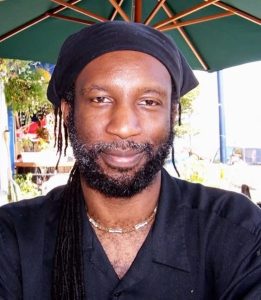
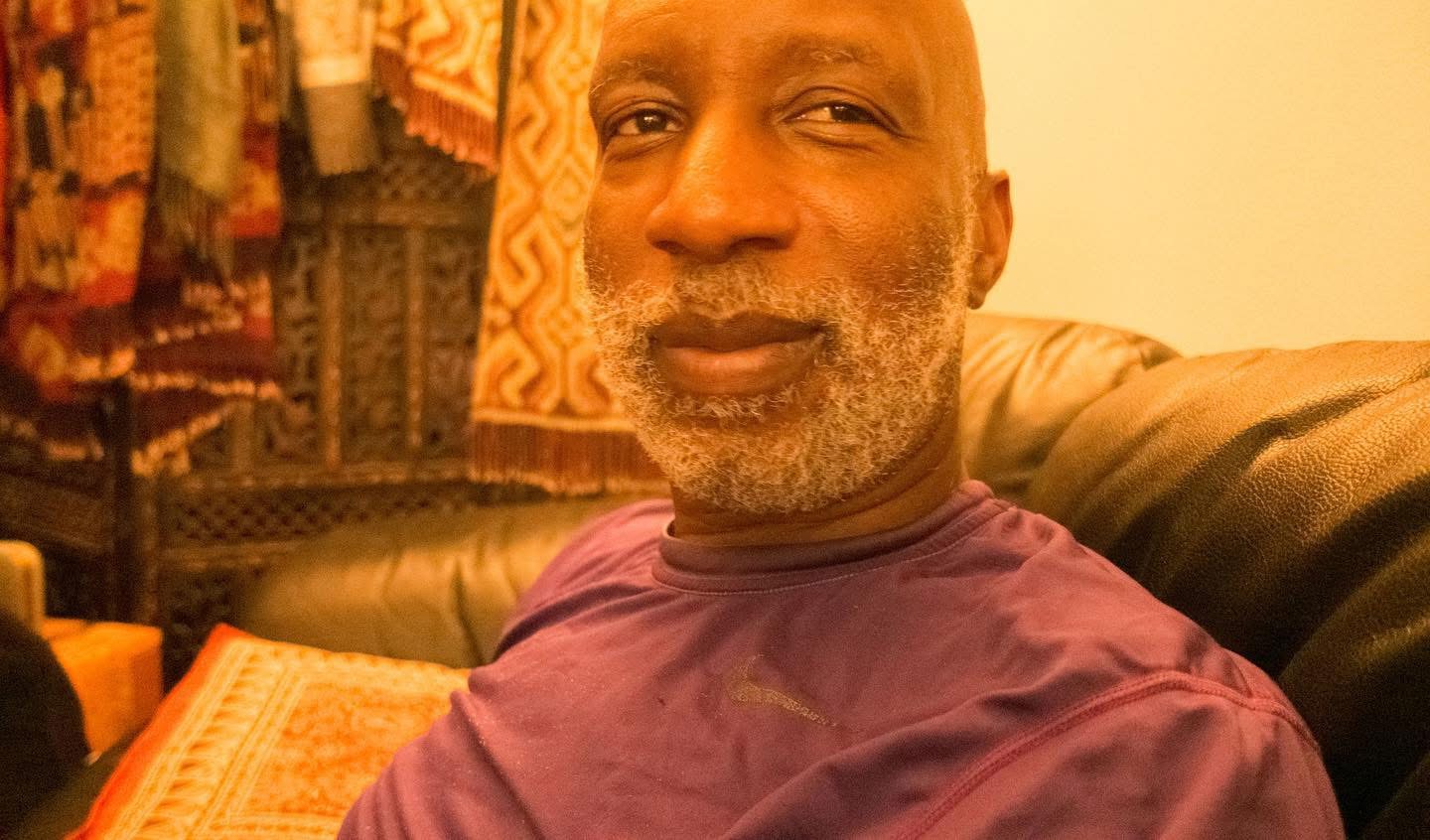
My sister, who is a hairstylist, out of the blue said to me, “You’re losing your hair, you might as well shave it off.” Which is a pretty radical thing to say to me considering that I’d had dreadlocks for twenty-five years at that point and they were a big part of my identity, as I grew up with Bob Marley as my hero. But I knew in African culture it was a tradition to shave your head after you’ve had your last kid and transitioned from warrior to junior elder. But before I could even process the thought, my sister started shaving my head and the next thing I knew I was bald.
People had always said to me that I would feel very different once my dreadlocks were gone, but I didn’t feel any different at all. I did notice that people started treating me differently. People started calling me sir and holding doors open for me. I also got fewer people staring at me, which was good.
I packed up my three-bedroom home in the woods and gave most of my stuff away, including two-thirds of my books — which were the hardest things to part with. I put my stuff in storage, bought a fifteen-year-old four-wheel-drive Japanese van, and set out for adventure, not knowing that I was going to end up spending the next seven years of my life driving 240,000 kilometres, living in that van, travelling all over.
It can be very rough being a middle-aged Black man in a futuristic-looking right-hand-drive van. First, there are the practical challenges of not having any access to a private bathroom or running water or a kitchen or electricity or the internet. Then there are the people who assume that you are a homeless bum and look down on you. Then there were the thirteen times that I was harassed by the police for no reason, mostly because of upstanding white citizens calling them on me. Then there is the stress of not knowing where you’re going to sleep on any given night, given that many cities have very aggressive anti-homeless laws and often you’re not even allowed to park anywhere.
But there’s also the upside of being able to go new places and having the freedom and opportunities that come with it. I mostly spent those years photographing six photography books, but I also had many opportunities to deepen my herbal practice.
Some of my favourite memories were of bushwhacking for ceanothus in Oregon, ocotillo and larrea in Arizona, neodilsea in Port Renfrew, usnea in Sooke, and arnica and devil’s club wherever I could find them.
I was also able to spend time in person with many herbalists that I admire, and who not only shared some of their knowledge with me but actually showed me how to make interesting things like medicinal beers and spagyric tinctures and herbal snuffs.
I was able to escape the Canadian winter for five of those eight years, which was a blessing.
I learned a lot about myself. When everything is stripped away and you’re living as simply as possible, there’s a lot of opportunity for self-examination. There’s also a lot of opportunity to learn about other people. One of the biggest lessons I learned about myself is I don’t need much. That I can live simply and minimally.
What I mostly learned about other people is most people are overwhelmed, distracted, and unhappy — except for my fellow herbalists, who were some of the happiest and coolest people I met along the way. There’s something so life-affirming and joyous about living a life with plants.
2020-2023
The Pandemic Years
And my world changed again. The world changed again.
I had ended my seven years of living in my van. I had just completed one series of photography books and was starting another. I was single and happy. I was the healthiest I’d ever been. I was looking forward to what the new year would bring. And what it brought was Covid.
The pandemic was a difficult time for many reasons. The isolation was brutal — living alone meant long stretches with no human contact. The fear and confusion were everywhere. People were desperate for reliable information and too often what they found was misinformation from all sides.
I had experience with coronaviruses from my years of practice — I had supported people through SARS and MERS. I felt confident in the herbal traditions I had spent decades learning. But the climate made it difficult to share what I knew. The conversation had become so polarised that there was very little room for nuance.
What I saw during those years reinforced something I had always believed: the foundation of health is a strong immune system, good habits, and a deep relationship with the plants and practices that have kept people well for thousands of years. That did not change because of a pandemic. It became more important.
Once the restrictions loosened, people were more hungry than ever to embrace connection. I had a new appreciation for my friends and family. And I had a new and greater appreciation for the herbs that have been central to my life and my practice for nearly four decades.
The pandemic will not be the last one in our lifetimes. I hope we have all learned some important lessons that will allow us to navigate the next one with more wisdom and less fear.
2023- Present
These Days
In my opinion, it’s job number one for a healer to stay current with the challenges that people are facing today — which are quite different from the challenges people were facing forty-two years ago when I first started this work.
Today I see people mostly affected by environmental and lifestyle factors. Things like PFAs and pesticides and antibiotics in the food supply. Climate change. Sedentary lifestyles. The psychological and spiritual toll of social media and misinformation and fear. The disconnect from nature and things that are natural. Short attention spans and a lazy quick-fix mentality. Ultra-processed foods and side effects from drugs both recreational and prescription. Loneliness and isolation. Touch deprivation. All of those things and more.
Today most people are going to get their health advice from AI and from shady influencers. When I’ve tried to use chatbots for health advice, sometimes the advice was pretty good and too often the advice was just crazy and potentially harmful.
I’m so sick of seeing all the overhyped health shortcuts and hacks all over all my feeds. I can’t seem to escape them.
There is literally nothing new under the sun — so if a therapy or herb hasn’t been used for at least a hundred years, it’s usually not worth thinking about. If someone claims they can do something better than nature, immediately dismiss it. With all this scientific power and money, they are not able to do anything better than nature. They can’t make a better sweetener than sugar or honey or maple syrup. Stop looking for shortcuts and hacks — holistic health is achieved through good habits and strong foundations. There is no magic wand or silver bullet.
Go back to your roots — literally — and stick to the fundamentals.
I think we as herbalists and natural healers can do a better job of having a greater presence in the public square. If we don’t take up this challenge, the people that we care about and want to look after will be misled by others.
The struggle will not be easy. But we have struggled before and we have prevailed. We struggled and ended slavery. We struggled and gained civil rights. We struggled and gained more rights for women. We struggled and made great strides against AIDS. We struggled and almost solved the problem of the ozone layer. We struggled and overcame acid rain. We are struggling and making gains for indigenous rights and trans rights, at least here in Canada. We struggled and ended apartheid.
I am happy to be struggling to promote holistic health and natural approaches to wellbeing. At sixty, I’m so happy that there’s so much to fight for and so much to learn. We in our lifetimes will never learn more than a fraction of what our plant allies can do, and I hope we don’t make too many of them go extinct for the sake of the planet.
Keep your foundations strong. Treat what you put in your body with the same care you would treat anything precious. Keep it as natural and unprocessed as possible.
I have been doing this work for thirty-nine years. I am still learning. That is how I know the work is real.
If you are ready to work together, we can begin with a conversation.